Showing posts with label historical fiction. Show all posts

Saturday, December 3, 2016

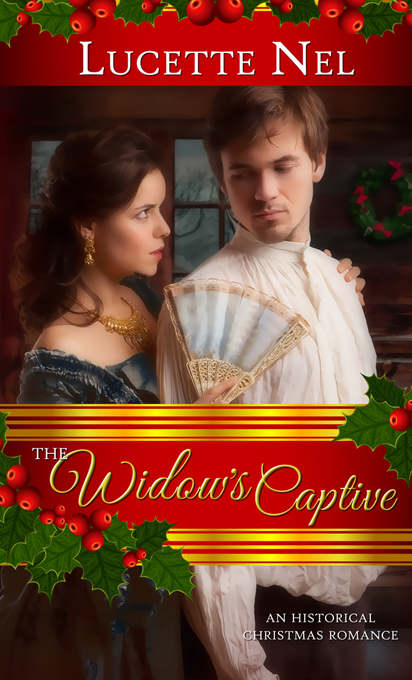
GIVEAWAY and Deanna's Review of The Widow's Captive. A Christmas novella by Lucette Nel.


Want to win a copy of Lucette Nel's The Widow's Captive?Leave a comment below to enter!

The Widow’s Captive is an adorable story about a woman on the run with two kids in tow. Not to mention the bun cooking in the oven. Someone’s after her, and the weather outside is frightful. It’s no wonder she takes refuge in an ‘abandoned’ cabin. 


When the unsuspecting sheriff arrives, Adeline Spencer gives him a piece of her mind, with a skillet to his head. Who could this guy be? Surely he’s in cahoots with the man who’s after her. Soon, Adeline’s got him hogtied. She’d rather push him out the door, but she can’t let him freeze to death outside.

Once he regains consciousness, there is lovely tension, humor, and a lot of back and forth between the protagonists.

Will Adeline have her baby during the storm of the century? And without a midwife around will Jonah the sheriff be competent enough to help? Will Ward, the man out to get her, find them at the worst possible time? And will the spark grow between Adeline and Jonah, or be extinguished by the unending snow and stress of being housebound before it can barely stoke a flame?


Lucette Nel’s writing is witty, intelligent and fun. An excellent writer, this debut author takes the inspirational historical genre by storm. Literally, a snow storm. I highly encourage you to try this entertaining holiday read. With a smidgen of romance, a touch of laughter, and a bundle of faith and fun, this story will warm your hearts just in time for the Christmas season.

Don't forget to leave a comment below to enter in the giveaway of Lucette Nel's The Widow's Captive. Tell us your favorite thing about the Christmas season.

Wednesday, September 14, 2016

Dear young and aspiring author,


Ever wished you could go back in time and share something with the younger you?
This month we decided to share some wisdom we've gained since writing that first chapter, things we've learned since our 'decision' to become writers.
Read Robin’s inspiring blog here if you’ve missed it.

I scribbled my first ever story in a notebook. In pencil, and I remember it like it was yesterday, not eighteen years ago. The words flowed. Sentences followed and paragraphs were created that evolved into chapters. I thrived! I wrote about five more ‘novels’ in notebooks. Back then I thought it was simple. I was so blissfully happy in my ignorance.

Then I started studying the craft and realized how much there was that I didn’t know. How very little I actually did know about this dream I wanted to pursue. Things that I’ve never even considered plagued me. It overwhelmed me. And it terrified me, but I persevered. Somewhere between joining ACFW and now, I’ve managed to gain some form of foothold. I’ve experienced just how up and down a writer’s life can be.
There are hundreds of things I would tell that starry eyed thirteen-year-old. But if I have to narrow it down, here’s the things that would’ve made a lot of things easier.

1.   Please do not compare yourself to other writers. Ever.

We’re all different. That's how God made us ;)
Some writers have a knack with descriptions. Others flourish with dialogue and some manage to create well-developed, larger-than-life characters. You have your strong points - you really do - don’t belittle your strengths. Appreciate the talent the Lord gave you and work on improving it.


2.   Don’t aim for perfect.

Allow yourself to write terrible first drafts. Writing a novel is going to take time, sometimes a lot of time. For some writers it takes multiple rewrites before they have a manuscript that’s publishable. You're one of those writers. And it's OK. If you always stress about writing a perfect first draft, you’ll never have anything to work with.
Good things take time.
Ecclesiastes 3:11 He has made everything beautiful in its time.
Nothing kill's creativity faster than perfectionism, especially during the first draft.
~K.M. Weliand, Conquering writer's block and how to summon creativity.


3.   You can’t make everyone happy – 

you’re not coffee!


Don’t let your people pleasing tendencies influence your writing so much on so many different levels. I have several examples that I won’t bore you with. The brutal truth is if you’ve received feedback you don’t necessarily agree with, then so be it. Unicorns aren’t going to keel over because you’re not accepting every single suggestion you receive. The sun will still rise. The birds will still sing in the morning. One day you’ll decide not to implement some suggestions you’ll receive from an author you admire and your book will be OK. You’ll be OK. The critic will be fine too. I promise!

4.   Enjoy the ride.

Don’t rush. You’re still young and naïve and have so much to learn. And yes, receiving that desired publishing contract is awesome. It really is. But so is the ride. And the people you’ll meet on the journey. Your speed doesn't matter. Forward is still forward!


Since I know we're not the only writers with some wisdom to share, I’ve asked a couple of my good friends to share their answers as well. Check out they're websites if you have a moment.

(Thank you ladies for sharing so willingly.)


Find a writing community. You will need it. There is so much to learn, and writing can feel like a very lonely endeavor. When the amount of work becomes too daunting or the rejections start coming in, you'll need a writing community to turn to. Supportive family members and friends are a huge blessing, but only fellow writers can completely understand and give you the reassurance that you're not crazy, and you're not alone.
~ Laurie Lucking

Knowing now what I didn't know then, if I could start over I'd start creating my platform much sooner and pay closer attention to the business end of this business, including marketing/promotion techniques. Writing a great book is vital, but not knowing how to promote it renders it moot.
Believe me, having to play catch-up where marketing techniques is concerned is my biggest regret.
 ~ Author, Linda W. Yezak

I think it was Steven James who said something to the effect of, "Worry about the story, not the sentence." I agree. A compelling story will get readers to forgive a multitude of sins if you can sweep them away. I would urge my younger writer self to (1) really explore plot structure sooner, and (2) make sure every scene raises the stakes, builds tension, and moves the story forward. #2 would have saved me a lot of re-writing. Oh, and one more thing: PLOT your story. I'm a huge convert now!
~Author, Heather Blanton

If I could turn back time (yeah...Cher's now stuck in my head), I would tell myself to pay more attention to what I was reading so I could answer the old cliche questions, who, what, when, where, and why?
Who: Who are the characters and why am I finding them so appealing? Then bring those qualities to my own characters.
What: What makes the story so good in my eyes? Is it the setting, the period, the plot, the characters?
When: When am I reading the most? Morning, afternoon, evening, night? If that's when I'm most drawn to story, maybe that's when I should be doing my writing.
Where: Where is the story taking place? What geographical area do I read about most, and why? Should I be setting my story in a similar area? Or maybe "where" could be where am I reading? Maybe think about writing in that spot. If that's where I feel most relaxed and open to imagery and story, that's where I should probably sit to do my writing.
Why: Why is this book important to me? How can that translate to my own writing?
~Mikal Dawn

Dear self-

Hello...it's me. Just wanted to drop you a note at the beginning of your writing journey. You probably already noticed that I said "journey," not "career." I won't throw zen statements about a journey being one step in front of the other or that it is a long haul. Don't be so hard on yourself when you fail, because you WILL fail. A lot. You will get unhelpful critiques and never hear back from agents or editors who asked you to submit. Yes, silence is the worst.

But...

Keep going. Even if it's a blog post or a chapter on a fanfiction story because your heart cannot find your book characters for days (even weeks). Write inspirations, even a sentence or just a word, because your characters WILL come back. Keep learning and step out of your comfort zone for a short story or two because you will surprise yourself.

Above all, be faithful to the vision God has laid on your heart. He has given you a story to tell. Tell it. He has given you desire to write. Write it. These words, they are not yours or mine, they are His.

~Sarah Bennett

As always,
Be Blessed
~Lucy

Tuesday, August 16, 2016

Love in Literature - Part 3


By Lucy


“I love stories about love. Love at first sight. Love that sneaks up quietly after years of friendship. Love that causes the heart to beat and the breath to draw short. Love that pulses, quivers, gushes, consumes, and overwhelms.” 
~ Robin Scobee


I won't lie. I love romances! I love the chemistry between the hero and heroine, the journey they travel to reach their happily ever after. (And I prefer reading romances with happily ever afters.)  The challenges they face and the struggles they overcome. And if you haven't already, read which couples made Jeb's and Robin's lists. 

If you know me, my favorite couple will not suprise you.

Michael Hosea and Angel from Francine Rivers' Redeeming Love.

They start out with the classic plot of Enemy turned Lover. 
Michael Hosea is determined to obey the Lord, which puts him in the uncomfortable position of clashing with Angel's internal goal.
They're off to a rocky start as husband and wife. And they struggle, clashing around every corner. 

Angel insists on leaving, striking out on her own. She's determined never to "belong" to anyone ever again in her life. She doesn't know how much she needs love, and since she hasn't been loved in so long, she's not sure how to respond to Michael's kindness. She makes one terrible mistake after another. 
Michael's committed to love her, even though she's nothing he expected in a wife. His obedience to a God she doesn't believe exists, coupled with his determination, drives her crazy. But Michael's love for the Lord enables him to follow His instructions. 
Who can resist a hero who loves his heroine but loves God most?

The swooning moment for me happens when Angel realizes how desperately she needed the Lord's redemption, and when she finally submits to it. We find Michael, the gallant, steadfast and committed hero, there to welcome her back after she was tested in the fire.


Reading Redeeming Love also enhanced my understanding of the book of Hosea, on which Francine Rivers based her novel. 
In the biblical story, God instructed the prophet Hosea to marry a local prostitute, Gomer. The Lord uses Gomer to teach Hosea about Isreal's unfaithfulness and the Lord's steadfast love and faithfulness to Isreal, even after Isreal's unfaithfulness.


Until next time,
Be blessed
~ Lucy


Monday, June 13, 2016

Sarah Monzon's Finders Keepers ~ GIVEAWAY


I had the opportunity to interview Sarah Monzon, bestselling author of The Isaac Project. She recently released her second novel, Finders Keepers (A Carrington Family Novel, Book 1) Trent Carrington and Summer Arnet stopped by too! =)

Sarah, we are delighted to have you, and congratulations on your second novel, Finders Keepers. Let's get started on those questions, shall we?


Lucy:     This is your second novel, would you mind telling us if publishing Finders Keepers was any different from publishing The Isaac Project? Was it easier? Any nerve-wrecking, nail biting experiences?
Sarah:            It was definitely different. Some aspects were harder and some were easier. The nausea induced from releasing the books into the big, wide world was the same for both, however. Worrying about how my baby was going to be received. Worrying if readers will love and relate to the characters, if they will be gripped by the story. I’m one hot mess of vulnerability.
           
Lucy:         We all need a hero! Tell us about Trent? Was there a real-life inspiration behind him?
Sarah:           Oh, Trent. Where do I even begin? He’s a heart stopper, that one. He has a laid-back, devil-may-care air about him with a hint of danger and adventure. His too-long hair, tattoo, leather jacket, and Harley encompasses his bad-boy, ladies’-man persona. Although he was raised in a Christian home, tragedy from his childhood has rocked his faith.
            Was there a real-life inspiration for Trent? No, not really. Although when I was writing a lot of the scenes between him and Summer, especially his flirtatious bantering, I would ask myself, “What would Jose have said?” (Jose is my husband and he was a HUGE flirt/ladies’-man when I first met him).

Lucy:        We love a heroine we can relate to! Any real-life inspiration behind Summer?
Sarah:           I think every character has a bit of me in them. Summer has a bit more than most. I don’t outline or have a complete story in mind as I write, it just comes as the story develops, so I was surprised when Summer was telling me her story (yes, my characters speak to me…don’t call the crazy house!).  I was surprised because Summer’s story is so similar to my own. Summer was conceived from a one-night stand and raised by an amazing single mom. She was grew-up with a daddy-sized whole in her life and that shaped a lot of decisions she made. For me, I was conceived from an affair my mom had when she was separated from a bad marriage (God’s grace from a mistake is what my mama calls me), and then raised me and my older brother by herself. While I at times yearned for that father-figure, I always knew I had a Heavenly Father who loved me and could literally feel his arms wrap around me in times of need and pain.

Lucy:         What was your favorite part to write and why?
Sarah:            Can I say all of it? Is that a cop-out? It’s true though. I had so much fun with Summer and Trent and their bantering. On the flip side, Isabella’s story is full of adventure and fast-paced and action-packed.

Lucy:         You obviously did a lot of research, anything interesting you want to share?
Sarah:           Google and YouTube are life savers. Seriously. I can’t imagine writing a book without those resources at my fingertips.

Lucy:        Is there a message in your novel that you hope readers will grasp?
Sarah:            God is your father. He has adopted you into His family. He loves you and He wants to call you son/daughter.

Lucy:         What are your future projects?
Sarah:            Finders Keepers is the first in a four book series. Each book in the series will feature on of the Carrington siblings. The next story, All of You, will feature Michael Carrington.


Hi Trent, so happy to have you here on our blog.

You’re a modern treasure hunter, any misconceptions you
want to clear about your career?

First and foremost, I am not a pirate. No matter how many times Summer says otherwise. No one benefits from artifacts that are hidden away. I find the treasure and people can learn more about past cultures and history. It doesn’t hurt if the finds line my pockets.

2.    Why did you choose your career?

I’ve always been interested in history and inspired by men like Ponce de Leon. Men who weren’t afraid to push boundaries, have adventures, and discover new worlds. Plus, it helps that I have won every scavenger hunt I’ve ever participated in. Drove my sibling crazy growing up.

3.    What’s been your favorite travel destination?
      I have a keen fondness for the Bahamas. I don’t kiss and tell.. oh, who am I kidding? The tropical moon is part particularly magic to steal a few kisses under.

4.    Are you an adrenaline junkie / daredevil?

I like to live life to the fullest. I work hard, play hard, and love hard. I don’t think that makes me a daredevil, do you?

5.    What do you like to do in your spare time? With whom? Trent your Harley doesn’t count ;)
I’ve been doing a whole lot more scuba diving than I ever have in the past. And I think you can guess with whom. ;)
6.   Are you in love with Summer Arnet?
      Does the sun rise in the east and set in the west? Does the moon control the tides?

7.    What does God mean to you?
Summer has come to show me that God is my heavenly Father. I’ve heard that phrase my whole life, and I used to roll my eyes whenever I heard my parents say it, but it’s true. I still have a long way to go, but instead of blaming God for some unfortunate events, I’m learning to trust Him.


And now, Summer's turn! (You look a little worried, Trent? Hehehe)

Summer, I’m so glad you agreed to this interview!

What are you most proud of about your life, personal and professional.


I must say I was fairly bursting with excitement to finally see my name with the photo credit in Our World. Years of hard work and dreaming finally paid off. Of course Trent’s sunken ship didn’t hurt either. Tabitha Michael’s really loved those pictures.


When you wake up in the morning, what’s the first thing you do?


Coffee. Must. Have. Coffee. I cannot function without it. Seriously. Don’t even try to talk to me before that first cup.

You’re taking a road trip – what music do you listen to?


Summer: I love some Adele and Michael Buble. Don’t judge.

What makes you angry?


Injustice. Human trafficking. Racism. Political corruption. Bullying. Child hunger. Oh, was I only supposed to pick one thing? I could go on and on.

Do you have any physical insecurities?


I never liked all my freckles. It’s a common companion to the red hair, but I always wished I had a less speckled complexion.

What was the first thing you noticed (physically) of Trent? (Heheheheheh)


Ugh. Is Trent around here anywhere? His ego is big enough as it is without hearing us dish about him. I can already picture his self-confident smirk. Oh well, he already knows when I first saw him I thought he resembled a Norse god. Let that one slip one time and he never lets me forget it.

What does God mean to you?


Because of my personal history, growing up without a dad in my life, the role of God as my father really resonates with me. After yearning all my life for that father figure, to finally have found one in the Creator…I’m sorry, can I have a tissue? *sniff*

 About the book:


​"1698, Spain
The same evil that stole her mother’s life stalks Isabella Castellano. Afraid for her safety and with no one to help her, Isabella disguises herself as a cabin boy and hires on to one of His Majesty’s treasure fleet vessels. But has her flight from a known threat only led her to be ensnared in a sea of dangers?
Present Day, Florida
Summer Arnet will go anywhere to capture the perfect shot that will get her marine photography noticed by the prestigious natural magazine, Our World—even diving in waters haunted by Great White sharks. When a treasure hunter with a ladies’ man reputation approaches her about a sunken ship at one of her past dive locations, it might be the chance she’s been looking for to launch her career…if his charming smile doesn’t derail her first. 

A past tragedy has left a hole in Trent Carrington’s life—a hole he’s tried to fill with women, money, and adventure. Could the feisty marine photographer be the missing piece or will Trent finally accept that the treasure he seeks can’t be found where rust and moths destroy? Three lives. Three hundred years. One ship that ties them together." 

Author Bio:

Sarah Monzon is a pastor’s wife and a stay at home mom to the two cutest littles in the world.  Playing pretend all day with them isn’t enough, she spends the evenings after their heads hit the pillow to create her own imaginary characters.  When she isn’t in the world of make believe, she can be found in a small desert town in central Washington taking care of her family, fostering friendships, and enjoying all the adventures each day brings.


Want to win a Kindle version of Sarah's novel? Of course you do!
All you have to do is leave a comment, with your email address to stand a chance.
Winner will be notified via email on June 18th.

Be blessed
~Lucy

To avoid spam, please leave your email in the following format : Name(at)gmail(dot)com

Tuesday, June 7, 2016

Five Reasons Why Writers Should Keep a Journal


By Robin

Blogging last week about the value of keeping a journal has me thinking this week about how important journaling is to the writer. 

It can take lots of forms. It need not be expensive or romantic. You don't need a leather bound volume and a fountain pen, or copious hours to devote to it. Unless you like that sort of thing. Then, by all means, go for it. But a 50 cent spiral notebook from Walmart and a Bic pen work too. Or the envelope of a piece of junk mail, and a broken crayon you found on the floorboard of the car is just as good.

Whatever form it takes, it's a good practice for many reasons.


Here are my top 5.


1. Preservation. If you played video games in the 90's, you saw these words on the screen when you tried to power off the Nintendo: "Everything not saved will be lost." It's true, and don't think for a second that you will remember that perfect line of dialogue that came to you while you were driving, or showering, or grocery shopping. It will be gone, like a dandelion puff, blown away to who-knows-where. You won't even remember that you wanted to remember. Use your smartphone, or keep a pad of paper in your purse, or even a napkin in your glove box. I've been known to utilize them all as makeshift journals. 

Don't let those wonderful bursts of creativity go to waste because you didn't have a way to preserve them until you could sit down at the computer and work them into your MS. You'll thank yourself when you open your journal later and find all sorts of crazy things sticking out of it, on which your creative gems have been saved.

2. Practice. Practice. Practice. Every May my kids bring home a writing journal they've kept since the beginning of the school year, and they always cringe to see their work from last August. "I can't believe I used to write like that!" they cry, embarrassed. And for a while, it will be embarrassing to see the misspellings, the crooked, ill-formed letters, and the terrible grammar, given what they know now. But after some time passes, they will look back on that old, simplistic work, and be fond of it. They will understand more clearly the growth that occurred, and they will appreciate having this artifact from their youth. It's proof of how far they've come, and how hard they worked even before they knew everything there was for a 2nd grader to know. It's proof of their mind, their hand, and their imagination. It becomes a treasure. The same is true for us who write.

3. Precision. Sometimes I don't know what I think until I see my own words on a page in front of me. Last year I decided my MS was ready to query (it wasn't, but that's a topic for another blog post). Nevertheless, I had to do something I'd been dreading: write the blurb. Every writer hates writing blurbs. It's universally painful to condense your 80,000 word baby into a 75 word summary. Staring at that blinking cursor on a blank white page, I panicked. I didn't know what my story was really about. I was so consumed with minute details, character arcs, and plot twists, I couldn't pull my head out of it long enough to say: This is who my MC is, this is what happens to her, and this is what's at stake. So, I did what I do. I clicked the computer off, sat down in my comfy chair, and opened my journal. I wrote about stories I liked, and what I liked about them; political things that had been on my mind; I copied down a bit of commentary I'd read recently which sounded like something my MC's father would say. Basic rambling stuff. Then something amazing happened about 3/4 of the way down the second page. I wrote this:
The church and state had united as a colossal tyrant over [my characters]. Failure to yield meant persecution, imprisonment, and death. Yet they resisted. They endured. This is what my story is about. It's about the child of a people who will not conform, a girl who wonders, "Why not conform? Life is better, easier, more pleasant for those who conform." The reader must ache for her to join her family on the Mayflower, to resist the urge to be a mindless, state-approving, acquiescing drone. The reader must learn, not only about history, but about herself, her place in time. She must come to the conclusion: I will not be coerced into believing what "they" (secular society) say is true. Even if they accuse me of "thoughtcrime." Even if they persecute me. I will rise up in defense of my conscience, my freedom.
Boom. A blurb was born in the pages of my writing journal.

4. Posterity. Most people think what they say today will never matter to anyone years from now. But anyone who's unearthed an old sack of letters, or read a crumbling, fading diary knows that's a lie. My grandmother-in-law, knowing my love of old things, gave me one of my greatest treasures. It's a tiny "Five Year Diary" kept by her grandmother-in-law, a woman named Rose. She wrote in it nearly every day from 1944-1948, mostly in pencil, and mostly about waxing the floors, ironing, attending funerals, and going to town. I love to see her handwriting, the places where she erased or crossed out words, the math problem she did on the corner of one page, and the list on the back page of enlisted Scobee men, and where they were stationed. It's a glimpse into another time, and a look inside this woman's life, but it's only a partial view which sends my imagination screaming down the path of story after story. 

Perhaps my own journals will eventually decompose in a box unread, but perhaps, seventy years from now, a great-great granddaughter will discover the words of this faithful woman who was passionate about story-telling. Perhaps she will read my thoughts as I walked this writing journey, my ups and downs, my frustrations, my prayers, my perseverance, my despondency, and my hope. Perhaps she will love them as much as I love Rose's words. Perhaps it's reason enough to keep a writing journal.

5. Purity. Nothing written for an audience is truly pure. The words we write for others tend to be biased, pompous, and pretentious. They're written to impress, beguile, entertain, and show off. Journaling is different. It's private. Truthful. Raw. It's our guts dumped out and splayed across the page, messy, sloppy, dirty, offensive, maybe even bloody. These are the kinds of pages you want to take out back and burn after you write them (please don't--they won't appear quite so bloody after some time has passed, I promise). It's therapeutic to write this way. It's like setting down a heavy bag you've been carrying a long time. You can stand up a little straighter after the weight of the words is out of you. You can look ahead and see more clearly where you're going, and why you're still following the same thread. 

Writing this way has preserved in me the ability to write the other way, you know, with the pre-planned chapters breaks, contrived obstacles, and lessons learned. That's the writing you edit and revise until your head is about to explode. That writing is for others. It's writing that entertains. For me, one kind of writing begets the other, enables the other, feeds off the other, and that's reason enough to keep a writing journal.

There are a thousand more reasons for writers to keep a writing journal! What are yours? Tell us in the comments.


Follow Robin on
Facebook
Twitter
Blog
Pinterest 

Wednesday, May 18, 2016

Stories that impacted my life


by Lucy

It’s my turn to share with you which stories have impacted my life. You can look up Robin’s here and Jebraun’s here.
I do believe something very magical can happen when you read a good book – J.K. Rowling
Like every author or aspiring author will tell you, I like to read. And though I have a list of titles that have touched me on this journey called life, I’ve decided to narrow it down to two books only. 
I hope I temp you to read them if you haven’t already. *Wink*


Redeeming Love by Francine Rivers

         
I’ve reread this book multiple times. I love it.

If you’re not familiar with the plot, it’s a skillful retelling of the biblical story of Hosea and Gomer. The book of Hosea’s purpose is to show the relationship between God and the people of Israel. God tells Hosea, a righteous man, to marry Gomer, a prostitute, and she’s not a very lovable person.

In Redeeming Love, God tells farmer Michael Hosea to marry Angel. Angel is a hardened, unlovable wreck. Sold into prostitution as a child, she's broken goods. She keeps hurting Michael, and God continues to tell Michael to take her back and love her.

This story is about GRACE and PATIENCE. Not only grace received from God, but also to show grace to our fellow man, to be gracious to their flaws and struggles as they plod along in this sometimes difficult road we call life. To be patient with them as they stumble every so often. It reminds me about the work God is doing in every person ‘behind the scene’.

Redeeming Love is about LOVE. Real and pure LOVE. It shows how even the most unlovable persons’ defenses crumble in the face of love.

Picture of Redeeming Love :https://books.google.co.za/books/about/Redeeming_Love.html?id=I7eMlFZ-drcC&source=kp_cover&redir_esc=y

The Carpenter's Daughter by Jennifer Rodewald


"Well. She isn't very pretty."
“Nobody would look pretty in that getup ... Butch, I’m telling you. She’s just butch.” – The Carpenter’s Daughter


I’ve always struggled with insecurities and this book touched a special spot in my heart.

The story tackles a very intimate question. WHO AM I? You meet Sarah Sharpe, and embark with her on her journey of SELF-WORTH and her search for this answer to the question which haunts her.

There are few acceptable molds our current society gives us. Molds that seems to be impossible for the everyday person to fit into. If you don’t fit, you feel average, inadequate, unaccepted and flawed.

You try to gain approval and forget that your worth will never and should never be determined by a fellow flawed human being. The Carpenter’s Daughter is about Sarah fitting to God’s mold, a reminder that God is interested in the heart and not the exterior.
The Carpenter's Daughter


Do you have stories that have left their imprint on your soul? We would love to hear about it!

Until next time
Be Blessed

~Lucy

Monday, May 16, 2016

Happy 2nd book birthday to Meghan Gorecki and her debut novel, God’s Will


God’s Will

Kathy Andrews is good at goodbyes. Her mother is sent to a sanatorium, her sister, left behind in Chicago, and her father, forced to roam looking for work. So she holds close to the only one she has left, her brother Danny. When the two go to live with the Marshalls in the sleepy town of Brighton, she doesn't let anyone past hello. Elliott Russell frowns at his aunt and uncle's generosity--even though he and his sister are on the receiving end. He frowns, too, at the uppity city girl with a chip on her shoulder whom he can't get out of his head. When a tragedy rips apart what tenuous existence they manage to forge, will they find the sweetest place to be is in God's will--or will they turn their backs on faith that fails to protect against pain?


ABOUT THE AUTHOR: Meghan M. Gorecki is an author of inspirational fiction, a blogger, book reviewer and voracious reader. Taking her life a day at a time as God leads, she is pursuing a career in the publishing industry as an editor in training and as a member of American Christian Fiction Writers. A hopeless romantic, history and Marvel nut, she's also a redhead (thanks to a box), who knows way too much trivia about movie musicals and the Civil War.

The paperback is on sale from May 11th thru June 1st for $9.99!
The Kindle version is on sale for $.99 on May 29th


You can connect with Meghan at the following:

Wednesday, May 11, 2016

4 Fictional Stories: How God Used Them To Teach Me About Himself


We're taking on The Power of a Story this month by choosing a few of those stories which have impacted each of us. Jebraun described hers last week.

When I began to compile a list of the stories that have taught me in the most profound ways, I noticed an interesting trend. Though they are wildly different, evenly split between male and female authors, spanning 131 years between the oldest and most recently published, and each from a different genre, they all did one important thing for me. Whether intentional or not, every one of them elevated my view of God.


1. 1984 by George Orwell. Published in 1949. Political Fiction.

God used this story to show me the beauty of his sovereignty.

I had just joined a new church when I read this book. My new pastor was seriously challenging my notions of God's sovereignty by bringing to light things I'd never considered before and exposing me to scripture I knew, but didn't fully understand.

It's a hard thing to grapple with: Is God really sovereign over everything? Like...even my choices??

I absolutely despised Big Brother, The Party, and the notion of an all-seeing, all-knowing, all-powerful entity watching you, coercing you, accusing you, limiting you, taking away your choices.
It forced me to ask myself some difficult questions.

Is The Party just a very warped metaphor for Christianity?

Does orthodoxy really mean unthinking?

Have we been cheated out of something we have a right to? Control over our destiny? The legitimacy of our human emotions?

SPOILER ALERT: When Winston is..."converted," shall we say, that event which should be the pinnacle of the Christian life, it is not a happy ending for him. It is a shock. The kind that makes you want to throw the book across the room and weep for humanity.

While I was reading this mind-bending fiction, my new pastor was simultaneously pointing me to scriptures like:

Romans 9:16-18 "So then [salvation] depends not on human will or exertion, but on God... He has mercy on whomever he wills, and he hardens whomever he will."

Wait...that sounds an awful lot like Big Brother, doesn't it?

Ephesians 1:4 "He chose us in him before the foundation of the world..."

But...what about our autonomy? Our choice? Our control?

Deuteronomy 31:21 "For I know what they are inclined to do even today, before I have brought them into the land that I swore to give."

"No!" my self-loving, self-centered, self-important soul cried out. "I am not Winston! You do not know how my story ends!" My sinful heart wanted to reject that kind of sovereignty.

Friends, the Lord worked on me during that time. I'll never, ever forget how he brushed the scales from my eyes, and used that incredible work of fiction, together with the teaching of my pastor, to show me his glory, his mercy, his boundless love for his people, and above all, the beauty of his all-seeing, all-knowing, all-powerful sovereignty.

Just before Winston gives in, disappointing us readers who rooted for him to resist Big Brother, he has a moment of clarity. He says, "To die hating them, that was freedom." I want to cry, reading that line today (pg. 281 in the Signet Classics Edition) because I know the truth. To die hating the Lord and his church is to perish, eternally separated from the God who pursued you. That is Hell! That is the opposite of freedom. That's why he pursues you! It isn't to coerce you, abuse you, scare you, or make you do anything you don't want to do. Christians aren't put in little rooms, bludgeoned intellectually, and fed propaganda until they go brain dead and give in.

In God's mercy, he does the work in our heart that makes us want his saving grace. We delight in his precepts. We desire his presence. We request a renewed mind. We long to be transformed to his image. 

What God is this? What marvelous, generous, sovereign-over-every-single-thing God is this, who, "being rich in mercy, because of the great love with which he loved us, even when we were dead in our trespasses, made us alive together with Christ... For by grace you have been saved through faith. And this is not your own doing; it is the gift of God." Ephesians 2:4-8

Have any sweeter words ever been written? Sorry, George. Your story is powerful, but Jesus wins.


2. The Handmaid's Tale by Margaret Atwood. Published in 1985. Speculative, Women's Lit.
God used this story to show me the depravity of humans, and the corresponding depth of his mercy.

I wanted to hate this book. I began the story with my hackles raised, ready pick a fight, and fully prepared to slam the book shut and stew for days. But I found myself instead under Margaret Atwood's brilliantly written spell, aching for Offred, needing to know how her story would end.

It wasn't necessary, as the introduction led me to believe, that a reader be a feminist, or even have feminist leanings, to fully get the horror of Offred's life. It was enough that I am a woman. That I am a human being.

It would have been easy for me to dismiss this story if it was simply an indictment of God or Christianity. Surely that's what most readers are left with. Maybe that was Atwood's intention. I don't know. But I saw a more complex theme emerge halfway through the book, when Offred stumbles through the Lord's Prayer, struggling to make sense of why and how she ended up in this place. She prays, "I don't believe for an instant that what's going on out there is what you want." 

Bravo, Offred. 

God's word is never wrong, though it's often twisted and warped. History has shown us over and over again how power in the hands of men (and women), whether it's put there by the church or the state, corrupts. Atwood's story shows us the pain people are capable of inflicting--have inflicted--justifiably, they think, on their fellow human beings, given enough power. And while this story points the finger at those who would perpetrate evil in the name of a God they misunderstand, it's clear that the root of the evil is in man, not God.

Every dark period of church history has ended when the dawn of good theology has risen to take its place. We have seen, again and again, how God is merciful to allow civilization to right itself after a time.

Praise God for his mercy.


3. The Giver by Lois Lowry. Published in 1993. Young Adult Lit, Dystopian.

God used this story to show me the perfect wisdom of his plan.

This is the only book I've ever read three times. I first read it as a college student for my Young Adult Lit class in 2001. I read it again when I taught it to 8th graders during my first semester as a Language Arts teacher in 2003. I read it again when my kids were old enough to read it too, in 2014.

It never gets old. With every reread, I'm moved even more deeply to make sure my children know this truth: They need never doubt the wisdom of God in giving us a world filled with both good and bad.

They've asked the question of me, "Why would God let the serpent into the garden of Eden and mess everything up? Why didn't he just give us a perfect world to live in now?"

It's a difficult question to answer. I don't presume to know the mind of God. But I can remind them of Jonas; the first time he was cold, the first time he saw war, death, blood, famine, pain. He wanted to know why The Giver was showing him these things. It was hard. Upsetting. Exhausting. Unpleasant. It was awful.

But with those awful things came color, diversity, joy, beauty, creativity...love.

Without darkness there is no light. Things are hidden from us, and we are not better for not knowing. Never experiencing pain does not make us happy. It makes us dull, unknowing, unsympathetic. That's not what God has in mind for us.

This story also teaches us that human beings can never create Utopia on earth. We are too corrupt, too limited in our knowledge of ourselves. I want this story to inspire my children, the world's future adults, to resist the urge of political ideas and personalities that promise Utopia.

The adults in Jonas's world tried, and their intentions were good. They wanted to create for themselves a world where there was no racism, no poverty, no disease, no weakness, no hunger, no death, and no decay. It sounds wonderful, doesn't it? On the surface, they were successful. But in the absence of these things, there was also a tragic absence of compassion.

Lois Lowry skillfully and gently pulls the curtain back, exposing Jonas to the evil required to sustain his "perfect" world. The visceral reaction of readers when they discover what "Release" means is universal. No matter your age, faith background, or political ideology, you are repulsed, and rightly so.

Few books ever written can make such a claim.


4. Les Miserables by Victor Hugo Published in 1862. Historical Drama, Classic.

God is still using this story to teach me about his grace.

Confession: I am still working my way through this massive novel. I've been at it for nearly two years. I'm 800 pages into an 1,100 page behemoth. I pick it up in stops and starts. It's too much to take in at once.

It's epic in scale and encompasses so much about the human life. Social injustice, grief, hopelessness, despair, perseverance, integrity, pity, suffering, faith, providence, war, love, unrequited love, and dozens more. But the theme that impacts me most deeply when I think of this story is God's grace, and how we are to respond to it.

Valjean, like Winston from 1984, is an "Everyman." We see ourselves in him. No matter our gender, our time in history, or our station in life, we were once filled with darkness, like him. We have all been without hope.

"During the years of suffering he reached the conclusion that life was a war in which he was one of the defeated. Hatred was his only weapon, and he resolved to sharpen it in prison and carry it with him when he left."

Valjean did not expect to receive grace from the bishop. He did not go looking for it, or asking for it. He most definitely did not deserve it. But it was given, freely and generously. After he steals the bishop's silver, he is caught by the police and dragged back to face the one from whom he stole.
"So here you are!" [the bishop] cried to Valjean. "I'm delighted to see you. Had you forgotten that I gave you the candlesticks as well? They're silver like the rest, and worth a good two hundred francs. Did you forget to take them?"

Thus, he is not thrown back into prison, as he justly deserves. Not only is he free, but he holds in his hands the means to begin his life anew.
"I was famished when I came in here. Now I scarcely know what I feel. Everything has changed."

Is this your response? You, the recipient of grace so lavish, so sacrificial, so undeserved, you can never repay your debt? 

Everything Valjean does over the next 1,000 pages is a response to this gift of grace. Becoming  a successful business man, fleeing Javert, adopting Cosette, saving Marius. This is his way to "present [his] body as a living sacrifice, holy and acceptable to God." Romans 12:1.

This heartrending story of grace has even been preserved in some measure in the many film and theater versions of the story. The producers can't help it. The message of grace is so pervasive, so lovely, so interwoven, there can be no Jean Valjean without the grace of God.


Follow Robin on
Facebook
Twitter
Blog
Pinterest